




Ecommerce
Zest Speciality Coffee Roasters
- 202%Increase in monthly organic traffic
- 253%Increase in keyword rankings
- 112%Increase in actions
The problem
Zest had the experience, the product quality, and the credibility — but not enough visibility in a highly competitive market.
As an established Melbourne coffee roaster, Zest had been supporting cafés and coffee lovers since 2009. Their offer spanned both wholesale partnerships and direct-to-consumer sales, giving them strong potential across two valuable audiences. But in a city saturated with respected coffee brands, gaining attention from either group was never going to happen by default.
The challenge was twofold.
On one side, Zest needed to build stronger awareness among everyday coffee drinkers looking to purchase beans for home. On the other, they needed to generate more wholesale enquiries from café owners and hospitality operators seeking a reliable supplier.
That meant their marketing couldn’t speak to just one audience.It needed to create relevance in both B2B and B2C spaces — while still feeling like one brand.
The insight
Zest’s challenge wasn’t a lack of value — it was a lack of discoverability.
The brand already had the expertise and product depth to appeal to both café owners and coffee consumers, but those audiences search differently, compare differently, and respond to different triggers. Trying to reach both with the same message would dilute the impact.
We recognised that growth would come from building a strategy with shared brand consistency, but audience-specific pathways.
That meant:
- Meeting wholesale prospects with more intent-driven messaging and landing pages
- Reaching retail audiences with more visual, promotional, and product-led creative
- Using SEO to strengthen long-term visibility across both commercial and educational search intent
The strategy
We developed a multi-channel strategy designed to generate both immediate enquiry and longer-term brand growth.
Paid search and paid social were used to create faster market visibility and target Zest’s two priority audiences more directly. At the same time, SEO worked as the long-game channel — improving discoverability, building authority, and creating more pathways into the brand through search.
The strategy focused on three core objectives:
- Drive wholesale enquiries through high-intent search activity and conversion-led landing pages
- Increase consumer visibility and sales through engaging social creative and offer-based campaigns
- Strengthen organic presence so Zest could continue building traffic and reputation beyond paid media
The Execution
Paid search formed a key part of the lead generation strategy, particularly for wholesale. We targeted location-specific and intent-driven keywords, helping Zest appear in relevant searches from hospitality professionals actively looking for a supplier.
To improve performance, we also ran A/B testing on dedicated wholesale landing pages, refining what messaging and structure would generate the strongest conversion outcomes.
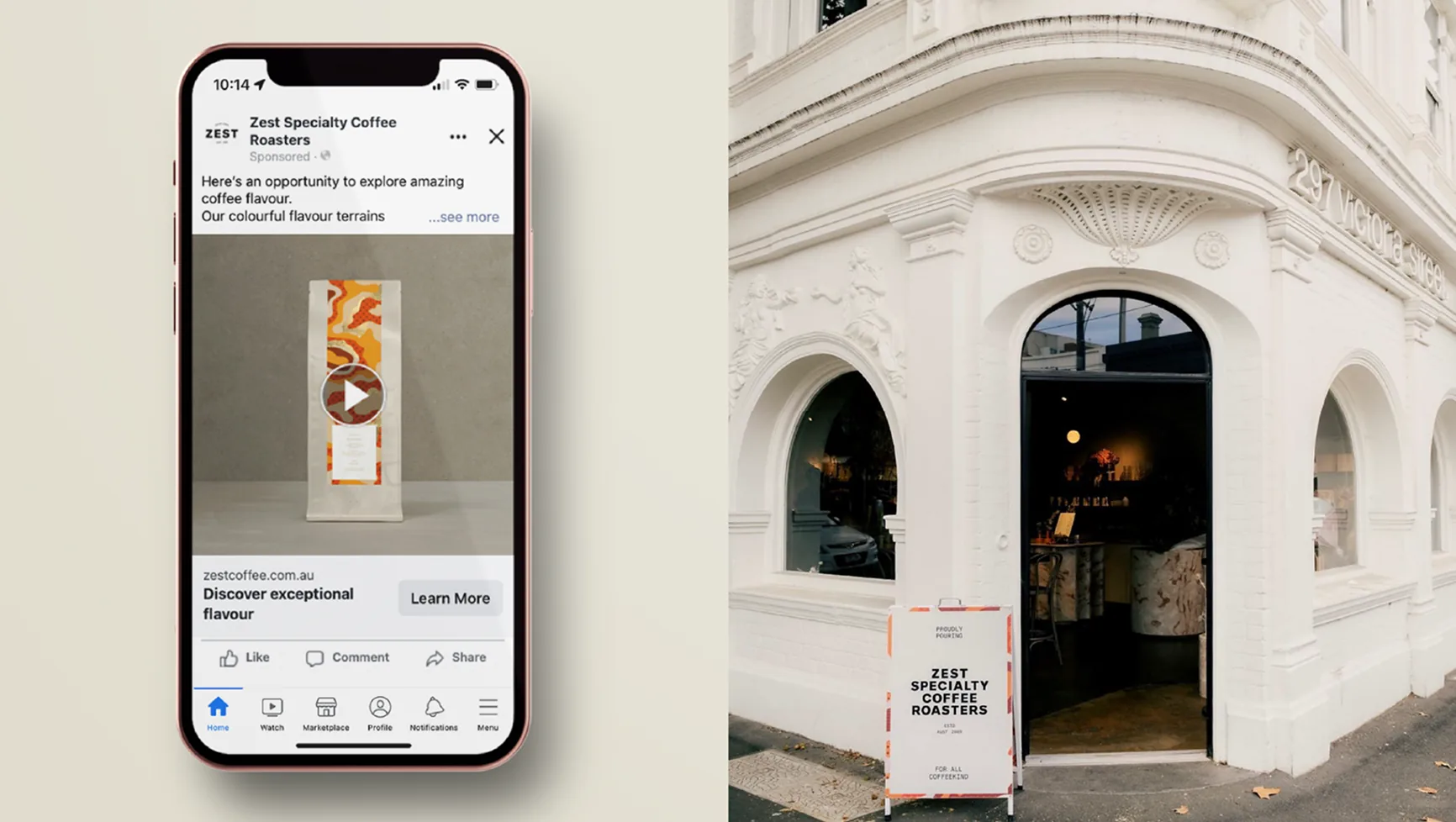
Paid social complemented this by reaching coffee consumers in a more visual, product-led environment. We developed a mix of static and carousel ads, often aligned to seasonal promotions, holidays, and gifting occasions. These campaigns helped keep the brand visible and relevant to retail buyers, while separate awareness ads supported broader reach and contributed to wholesale enquiry generation as well.
To avoid fatigue and maintain attention, creative was refreshed on a monthly basis throughout the campaign.
Supporting both paid channels was an SEO strategy focused on improving Zest’s organic footprint across the site. This work included:
- Optimising existing pages for stronger keyword targeting
- Creating landing pages aligned to user intent
- Writing blog content aimed at café owners and hospitality professionals
- Building more pathways into the brand through informative, search-friendly content
 Discovery Call